

The Sword & the Trowel
Volume I (1865)
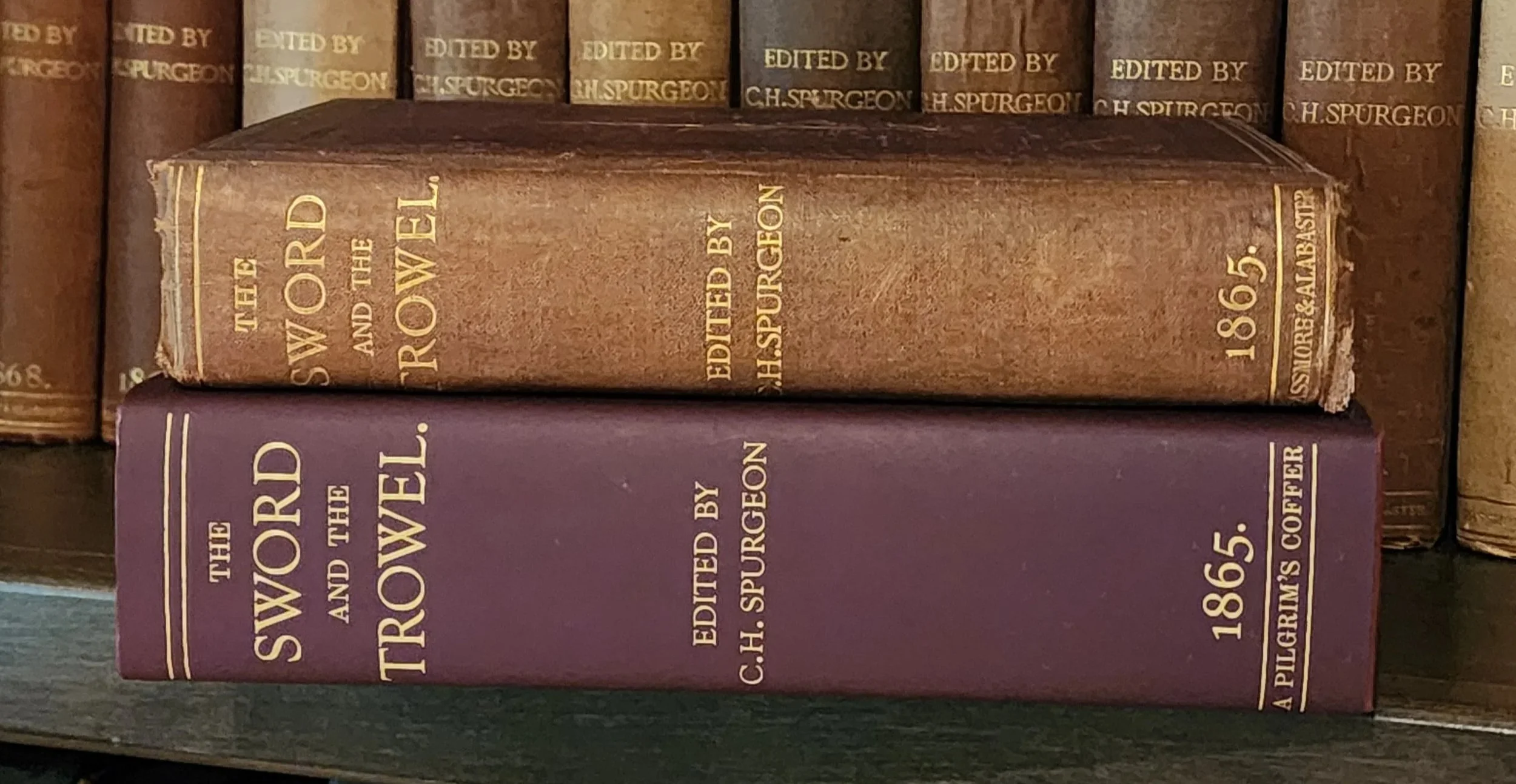
Now available is the full, unabridged, and completely re-typeset volume of the inaugural year of Spurgeon’s own magazine.
Recent Bookstore Offerings
APC Printings
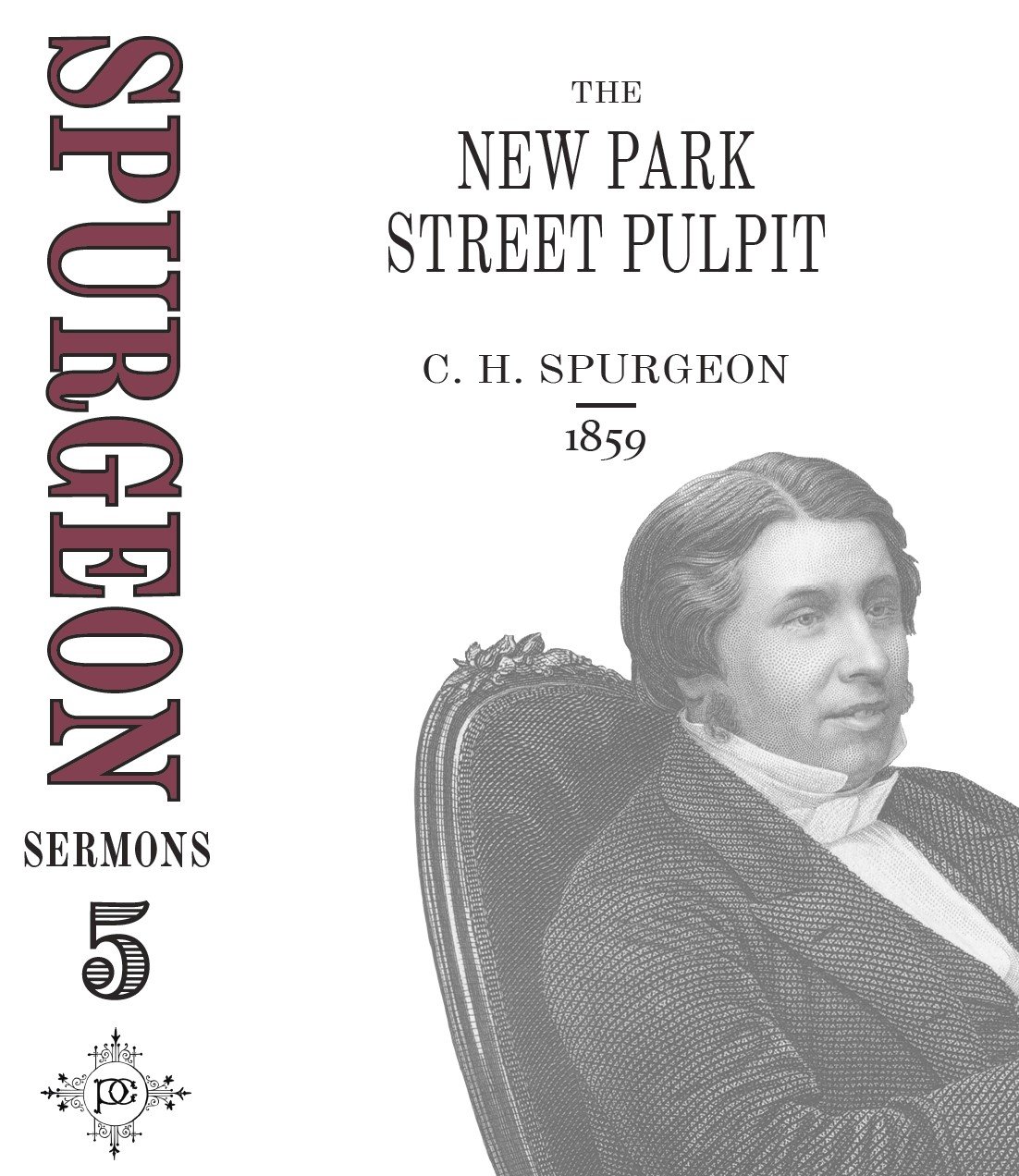
For the first time ever, we are fully retypesetting Spurgeon Pulpit Sermon volumes—New Park Street Pulpit + Metropolitan Tabernacle Pulpit volumes.
This is for Volume 5 for the year 1859 in the limited edition navy blue boards.
No current ETA, but we will update as soon as the project moves into production.
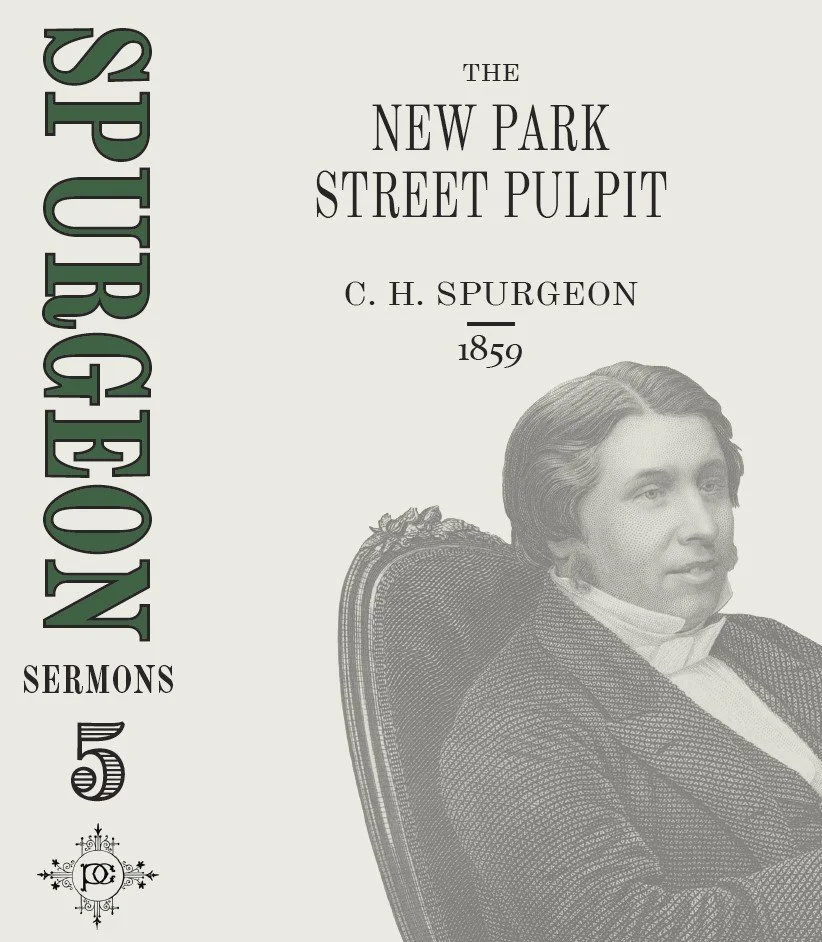
For the first time ever, we are fully retypesetting Spurgeon Pulpit Sermon volumes—New Park Street Pulpit + Metropolitan Tabernacle Pulpit volumes.
This is for Volume 5 for the year 1859!
No current ETA, but we will update as soon as the project moves into production.
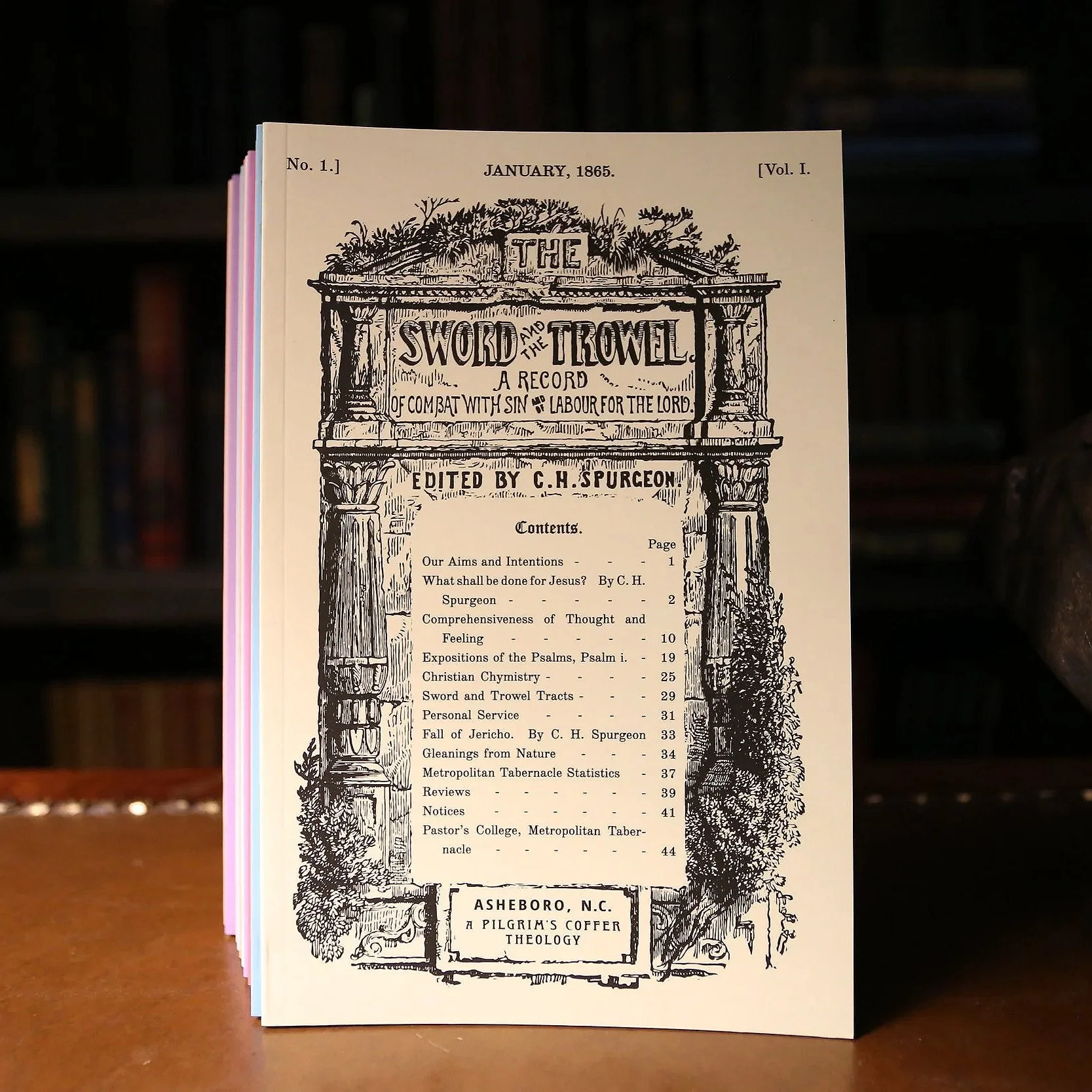
Since The Sword and Trowel monthly magazines were originally published, they have never been properly reproduced in full in any physical format, much less re-typeset into modern digital font. At A Pilgrim’s Coffer, we are starting to remedy this deficit starting with the first original volume from 1865.
These monthly issues are the individual printings contained within the annual 1865 volume; if you have ordered the annual volume, you will receive all of these issues bound in a single hardback volume—but we realize some may appreciate having the standalone issues as they were first published each month.
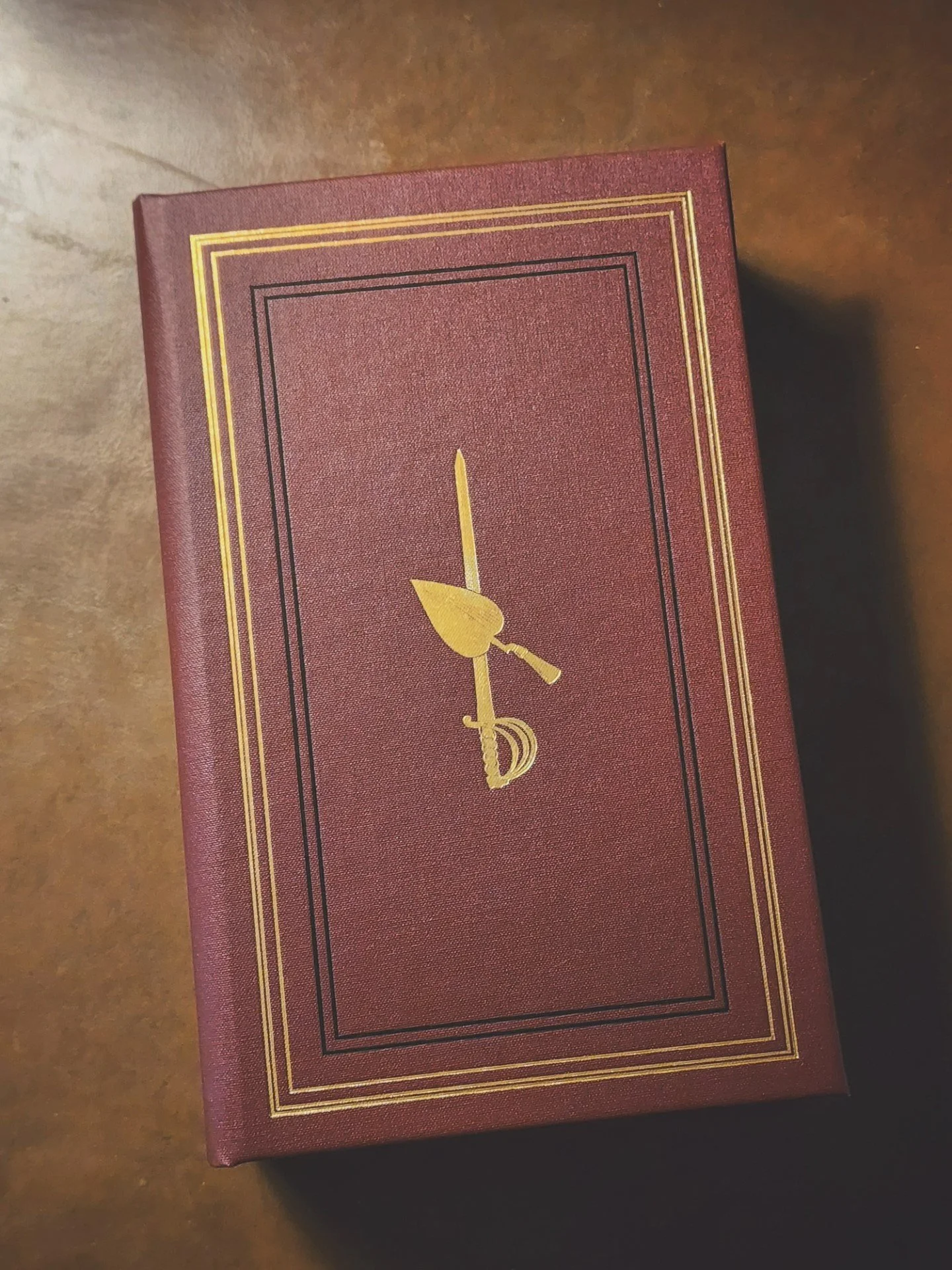
Since The Sword and Trowel annual magazines were originally published, they have never been properly reproduced in full in any format, much less re-typeset into modern digital font. At A Pilgrim’s Coffer, we are starting to remedy this deficit starting with the first original volume from 1865.
This is the inaugural Volume 1 for the year 1865!
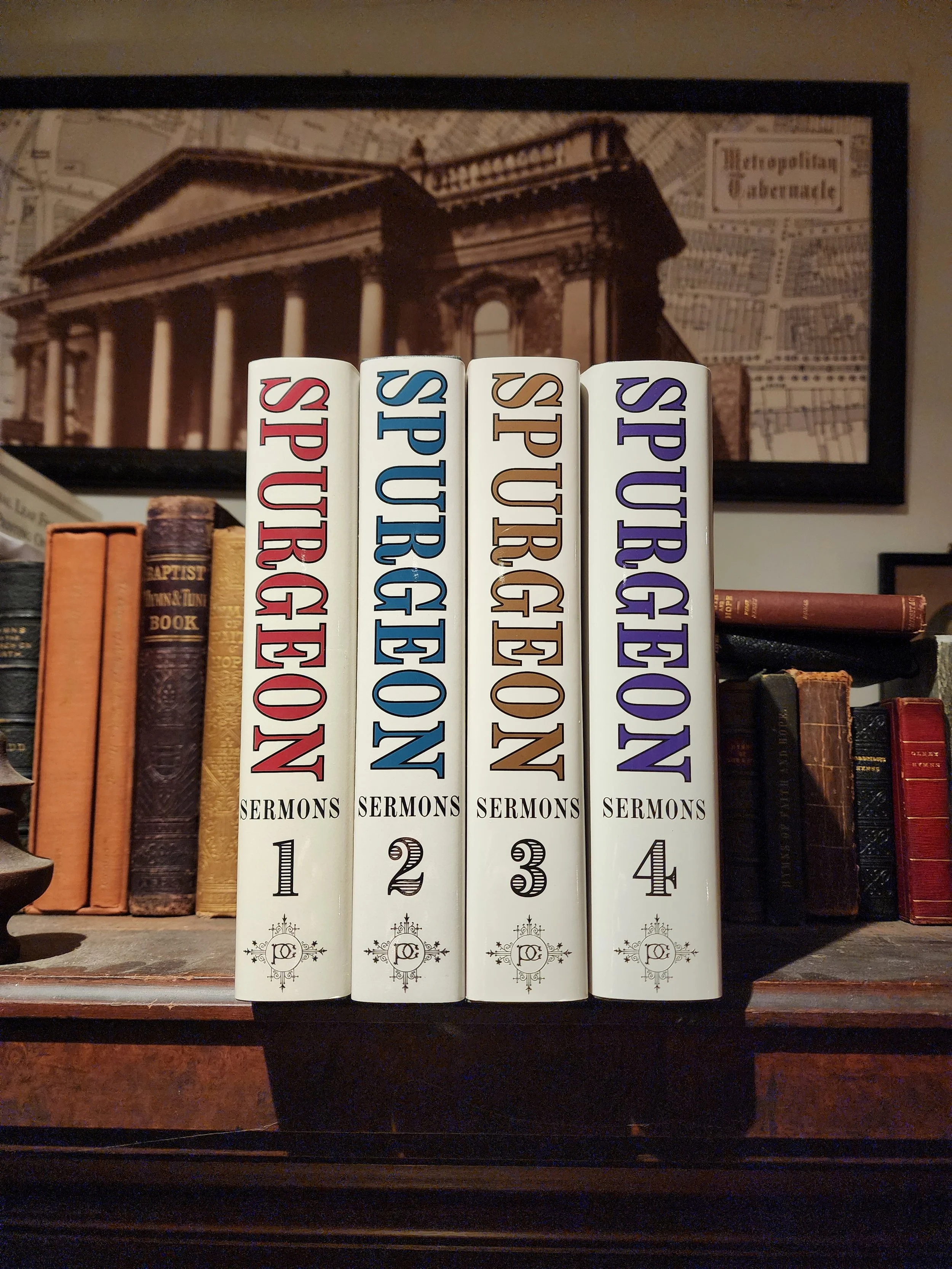
For the first time ever, we are fully retypesetting Spurgeon Pulpit Sermon volumes—New Park Street Pulpit + Metropolitan Tabernacle Pulpit.
This partial set offering is for all volumes currently available.
Volumes are Standard Edition (Dark Grey).
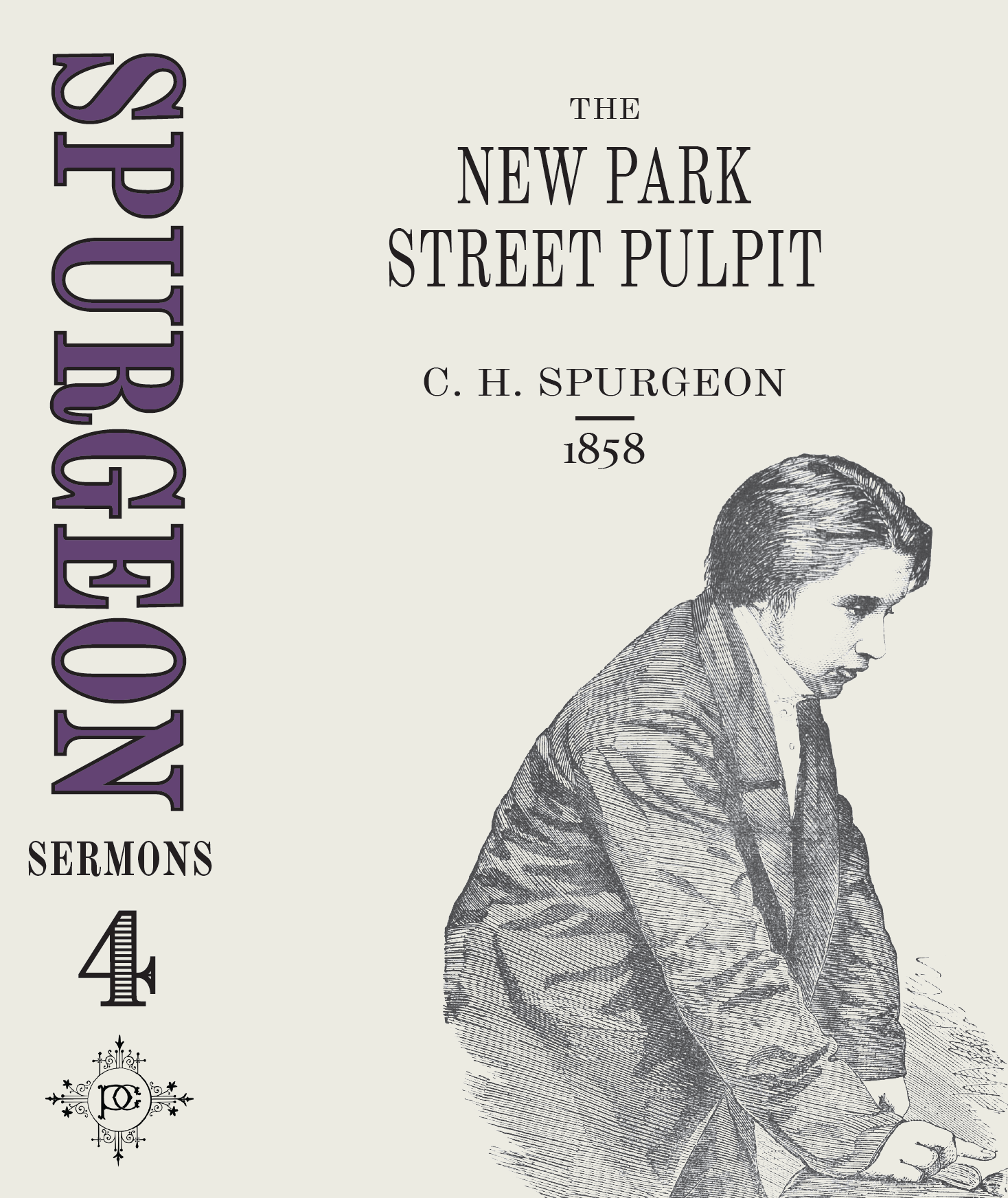
For the first time ever, we are fully retypesetting Spurgeon Pulpit Sermon volumes—New Park Street Pulpit + Metropolitan Tabernacle Pulpit volumes.
This is for Volume 4 for the year 1858!

For the first time ever, we are fully retypesetting Spurgeon Pulpit Sermon volumes—New Park Street Pulpit + Metropolitan Tabernacle Pulpit. This is for Volume 4!
This limited navy edition is identical to the standard offering, except that the boards are blue and the dust jackets are solid white instead of off-white.
The numbers for these navy editions will always be minimal; volumes are limited to ~100 volumes.
ALL limited edition volumes come with complimentary dust jackets.

Currently expecting for June 2025 — follow along with us to keep updated!
For the first time ever, we are fully retypesetting Spurgeon Pulpit Sermon volumes—New Park Street Pulpit + Metropolitan Tabernacle Pulpit volumes.
This is for Volume 3 for 1857!

For the first time ever, we are fully retypesetting Spurgeon Pulpit Sermon volumes—New Park Street Pulpit + Metropolitan Tabernacle Pulpit. This is for Volume 3!
This limited navy edition is identical to the standard offering, except that the boards are blue and the dust jackets are solid white instead of off-white.
The numbers for these navy editions will always be minimal; volumes are limited to ~100 volumes.
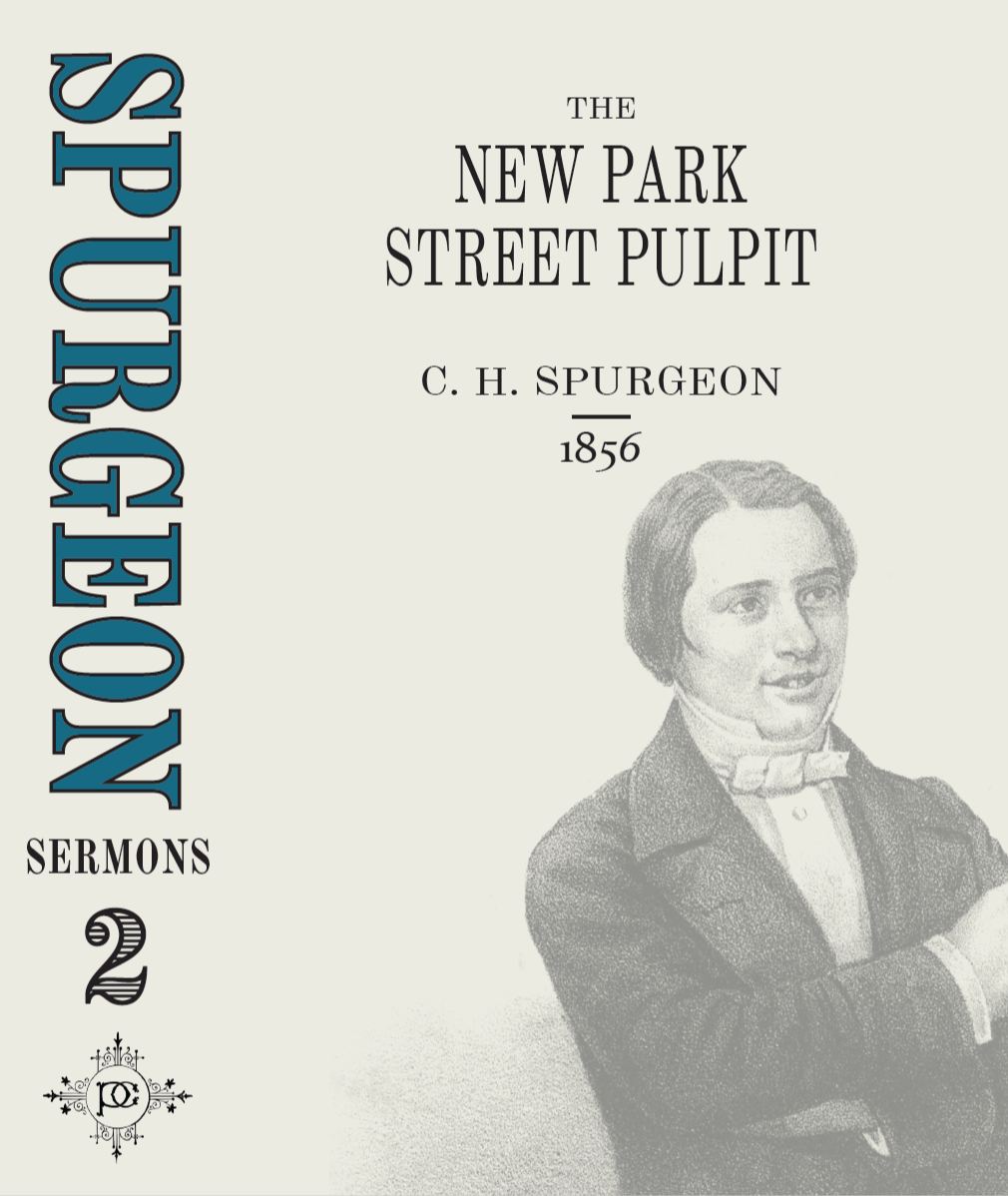
For the first time ever, we are fully retypesetting Spurgeon Pulpit Sermon volumes—New Park Street Pulpit + Metropolitan Tabernacle Pulpit volumes.
This is for Volume 2 for 1856!
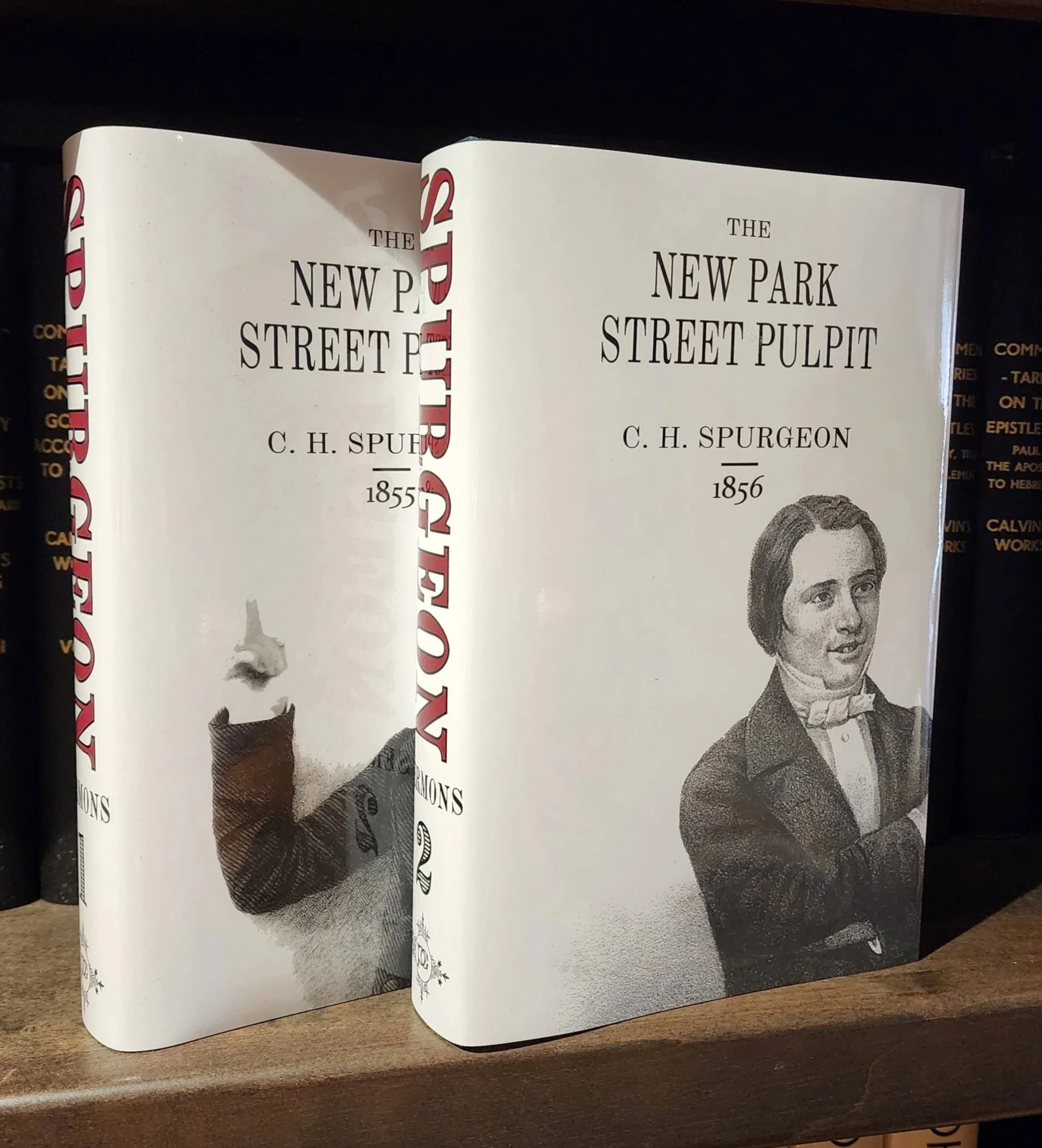
For the first time ever, we are fully retypesetting Spurgeon Pulpit Sermon volumes—New Park Street Pulpit + Metropolitan Tabernacle Pulpit. This is for Volume 2!
This limited navy edition is identical to the standard offering, except that the boards are blue and the dust jackets are solid white instead of off-white.
The numbers for these navy editions will always be minimal; Vol. 2 is limited to 100 volumes.

For the first time ever, we are fully retypesetting Spurgeon Pulpit Sermon volumes—New Park Street Pulpit + Metropolitan Tabernacle Pulpit—beginning with New Park Street Vol. 1 (1855).
This limited navy edition is identical to the standard offering, except that the boards are blue and the dust jackets are solid white instead of off-white.
The numbers for these navy editions will always be minimal; for our first printing of Vol. 1, this equates to less than 100 navy editions available.
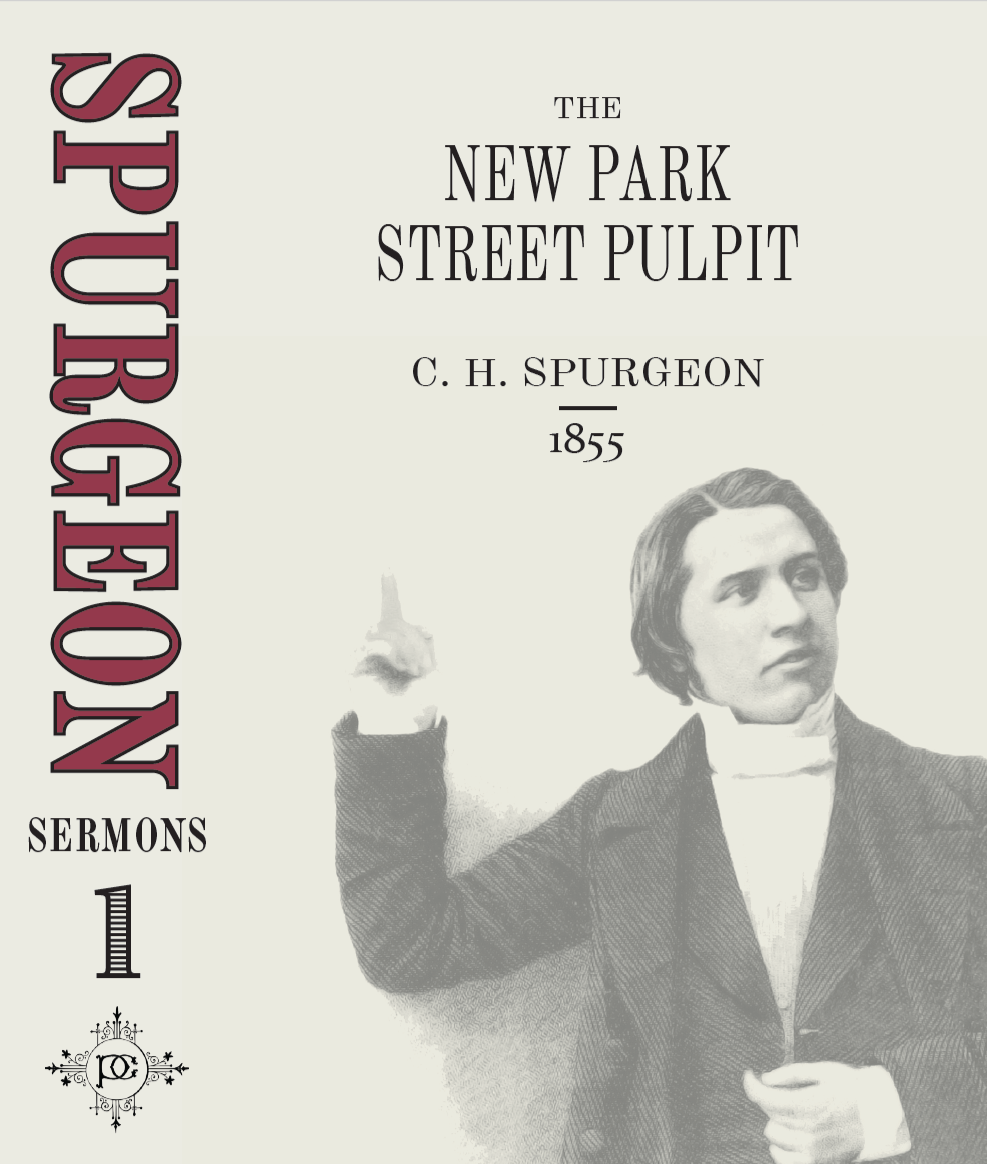
For the first time ever, we are fully retypesetting Spurgeon Pulpit Sermon volumes—New Park Street Pulpit + Metropolitan Tabernacle Pulpit—beginning with New Park Street Vol. 1 (1855).

A suggestive approach to understand the famous preacher and author. Includes chapters on Bunyan in his own day, Bunyan in the 20th century, along with his Allegories, his Legacy, and his Codicils (or forty-five factions extracts from his work).
Written by one of C.H. Spurgeon's beloved evangelists, W.Y. Fullerton. Originally published in 1928.
Addresses given at the 1907 Pastor's College Conference in the Jubilee year of the school.
Includes addresses from Thomas Spurgeon, Principal McCaig, and others. Additional appendix material from C.H. Spurgeon.
Never before reprinted. Fully re-typeset.
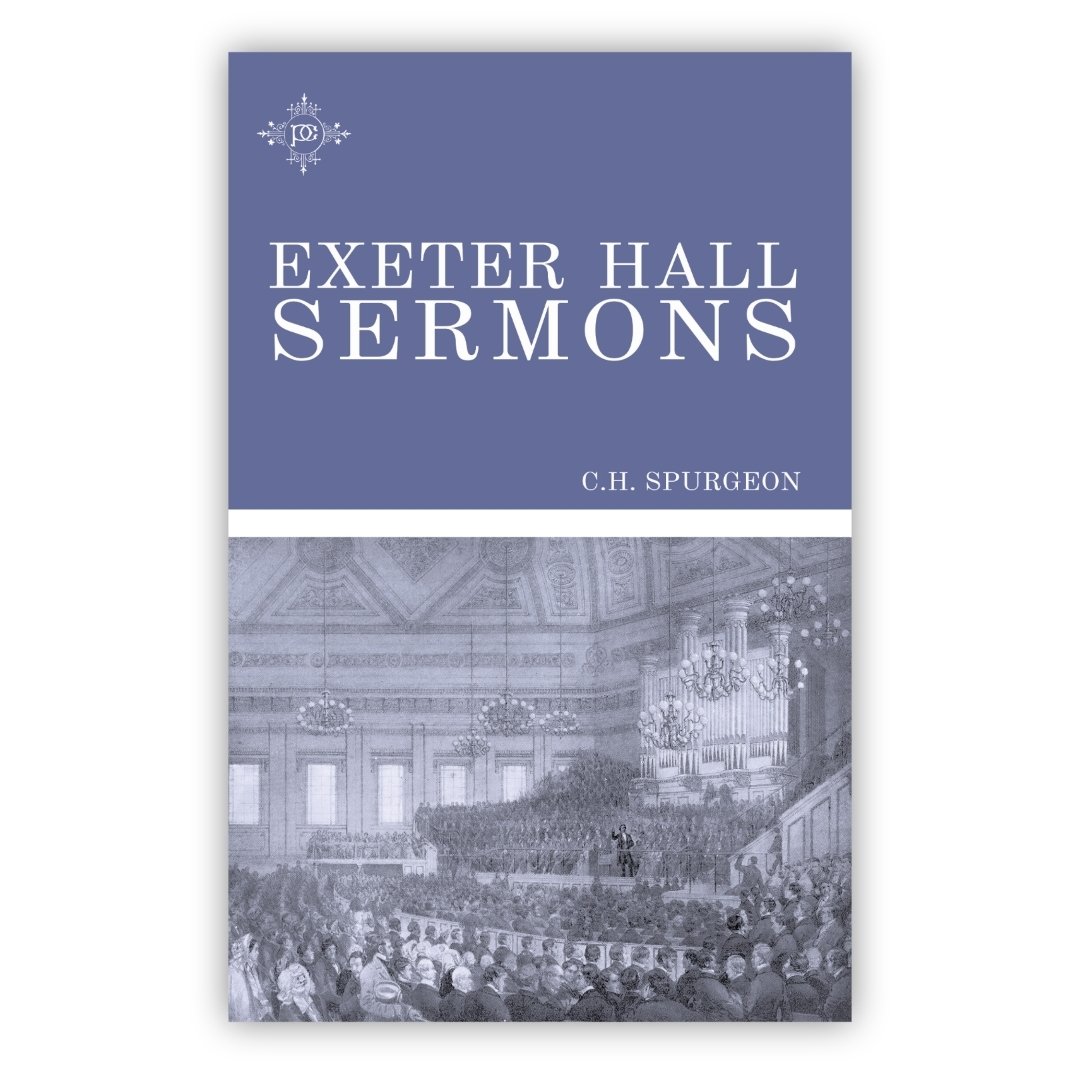
For the first time ever, we are fully retypesetting Spurgeon Pulpit Sermon volumes—New Park Street Pulpit + Metropolitan Tabernacle Pulpit—beginning with New Park Street Vol. 1 (1855).
The Exeter Hall Sermons was a volume printed during 1855—before the completion of the Pulpit Vol. I printing—making it the first ever sermon book of Charles Haddon Spurgeon. These 19 sermons are the sermons in 1855 that were given at Exeter Hall on The Strand in London, during which the New Park Street Chapel was being enlarged.
NOTE: While these sermons are the same as those that will appear in the Vol. I printing, this volume includes the following additional material that the full Pulpit volume did not contain: Concluding Services (final day) morning and evening prayer + expositions of scripture, along with full literary review of The Baptist Messenger that was printed when this printing hit the market.

A collection of A Pilgrim’s Coffer published paperback volumes which incudes:
—Exeter Hall Sermons by C.H. Spurgeon
—The Legacy of Bunyan by W.Y. Fullerton
—Fundamental Truths Re-Affirmed from Spurgeon’s Pastors’ College in 1907
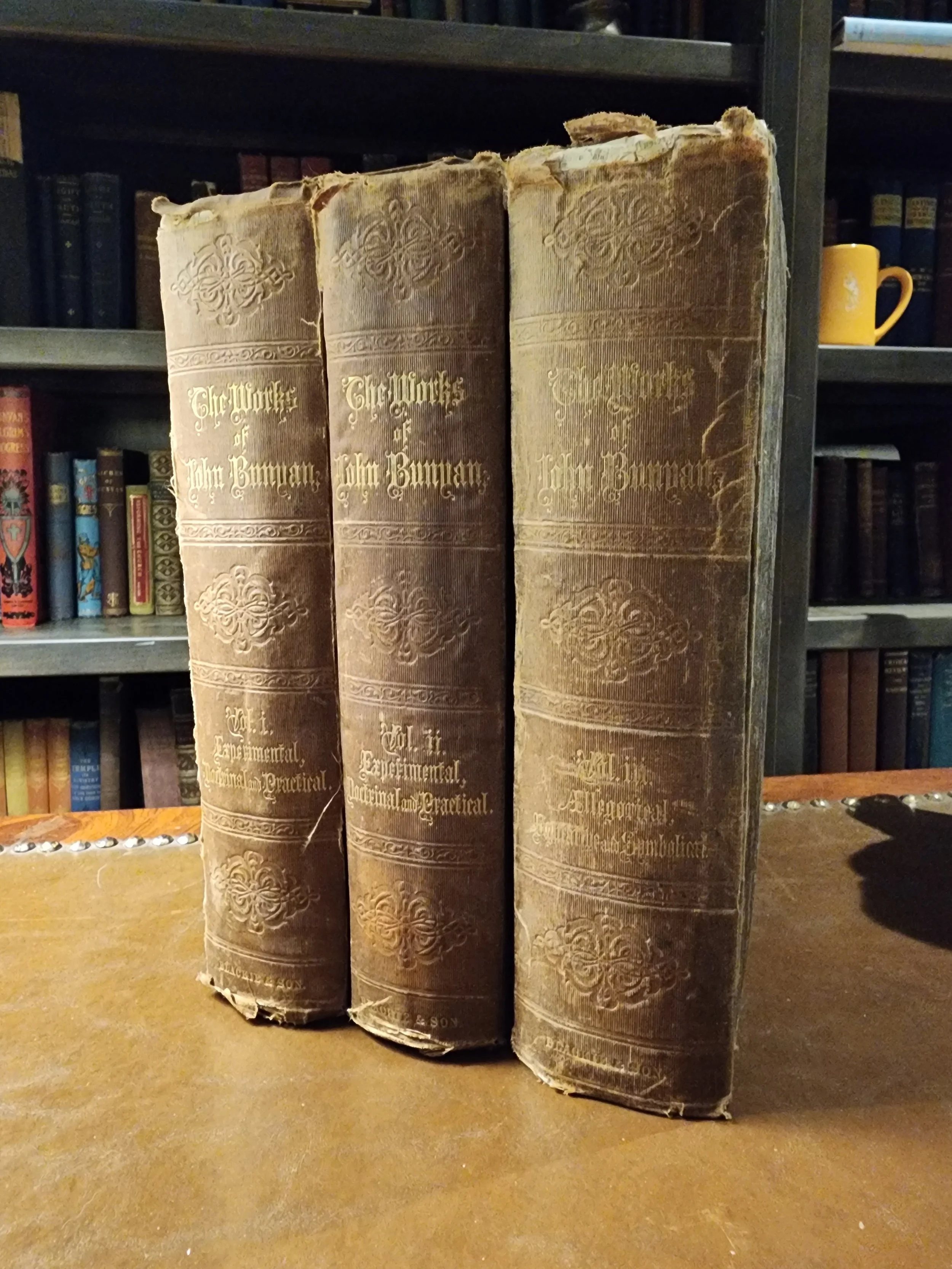
Edited by George Offor, this Blackie & Son 3-vol. set, printed during 1853-54, is the standard antique set of Bunyan’s Works. While several set of his works were produced in the Victorian era, this has become the most respected; it is the source of prominent modern reprints.
Here’s your chance to own an original Victorian set for yourself!
The boards show wear consistent with age, with some separation in areas at the spine edges, but the book blocks are quite sound tight. Still very much a readable and usable set. The pages are very clean and easily readable, with little to no significant discoloration or foxing throughout. You will read these as clearly and easily as you can read the modern reprints.
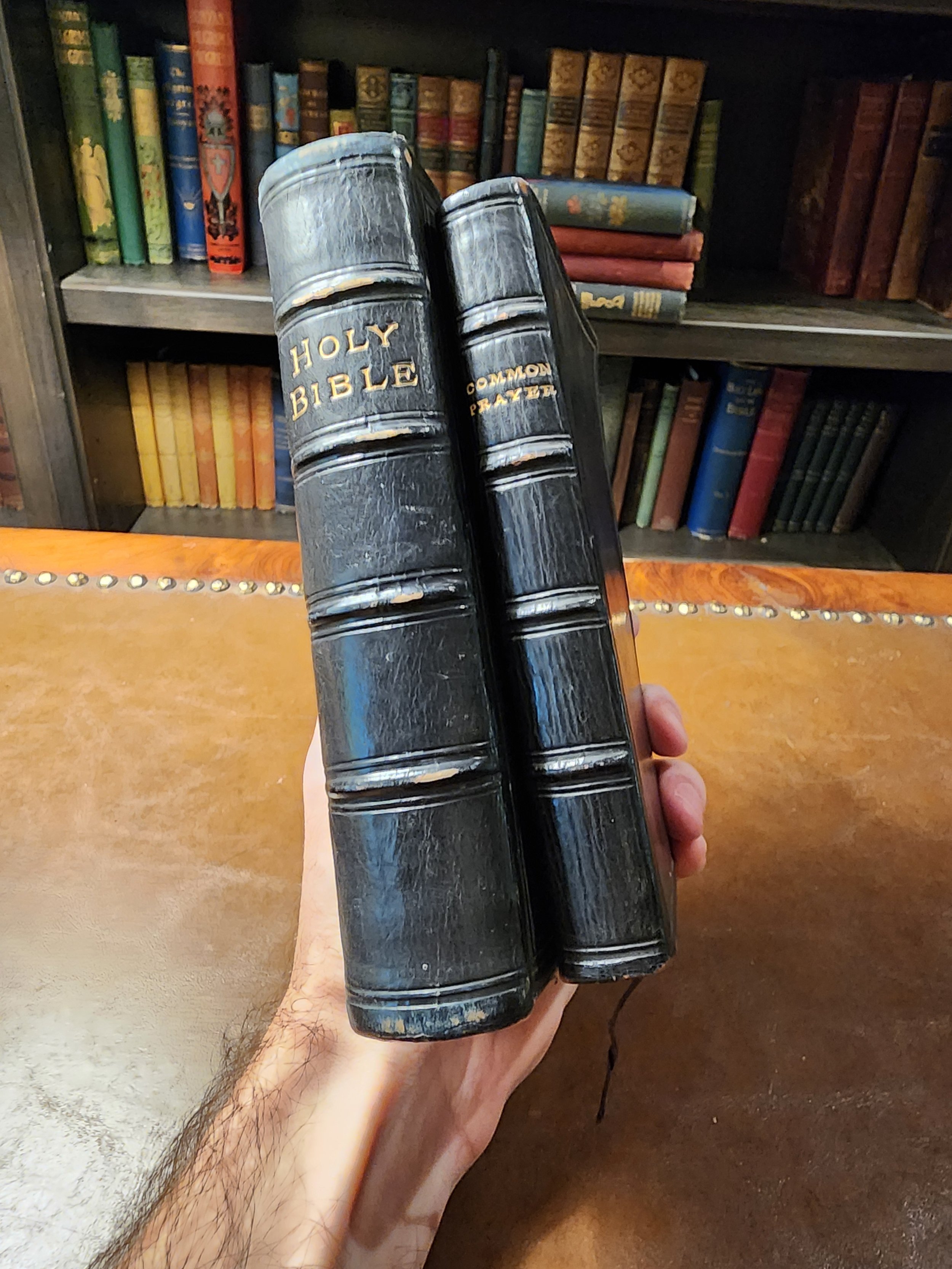
A beautiful black leather matching set of Oxford printings, the Holy Bible (Authorized Version/King James) and Book of Common Prayer, from c.1890.
These volumes were printed at the Univeristy Press at Oxford for the Society for Promoting Christian Knowledge.
These have matching bookplates indicating they were a gift to the same individual in 1893.
The Bible is a Nonpareil size, which were printed in the general area of 6” x 4”, indicating a “pocket-size” or hand-held size volume with font in the 6-6.5pt. range.
The Book of Common Prayer is a Small Pica printing, which indicates that the primary font is around 11pt.
We do not come across many matching sets of volumes, much less in such supple leather. By theological beliefs, we do not promote adherence to the Common Prayer book, but for historical purposes and some of the comeliness of prayers included, we do find value. The Common Prayer book was (and remains) and institution in the Church of England, or Anglican denomination. Spurgeon commented on it quite often, particularly in early years, but largely as a by-product of its utilization and reliance among the Episcopal government church.
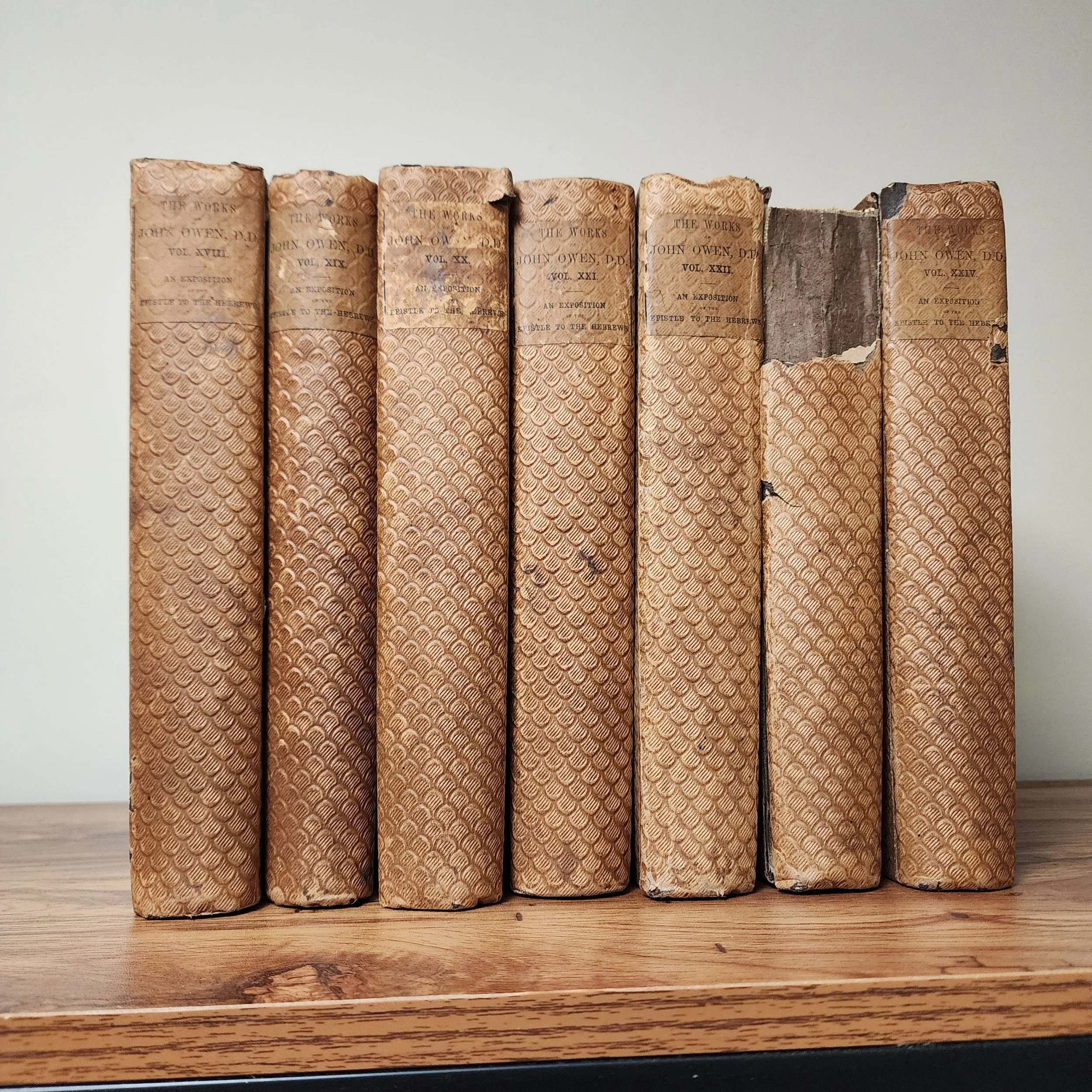
**This 1862 printing of Exposition of Hebrews, in seven volumes, is the source material that was photolithographed (copied) for our modern editions; it is the same as the T&T Clark publication of the content. Combined with the 1826 21-volume Works of John Owen, this exists as the content of the first full publication of John Owen’s complete works.**
‘…a work of gigantic strength as well as gigantic size; and he who hath mastered it is very little short, both in respect to the doctrinal and practical of Christianity, of being an erudite and accomplished theologian.’ — THOMAS CHALMERS
“John Owen here analyses the text of Hebrews with care and provides a judicious interpretation which shows an impressive familiarity with a wide range of biblical scholarship. He also provides rich practical applications.
John Owen (1616-1683) was probably the greatest systematic theologian of the British Puritans, yet such was his depth of Christian wisdom and discernment that he also excelled in pastoral and spiritual theology. Common to his stature in both of these areas was his understanding of Scripture. While this is evident throughout his writings, it is in his massive exposition of the Epistle to the Hebrews that the range of his knowledge and the depth of his exegetical powers are most evident. Here he analyses the text with care and provides a judicious interpretation which shows an impressive familiarity with a wide range of biblical scholarship. In addition, following the classical Puritan method of commentary with its constant concern for Christian living, he provides rich practical applications. Thus in a balanced way, he addresses both mind and heart. Written with the reverent spirit of a scholar-pastor whose stated aim in his ministry was ‘to promote holiness’, Owen’s study of Hebrews is one of the great classical commentaries of the Christian Church.”—Banner of Truth.
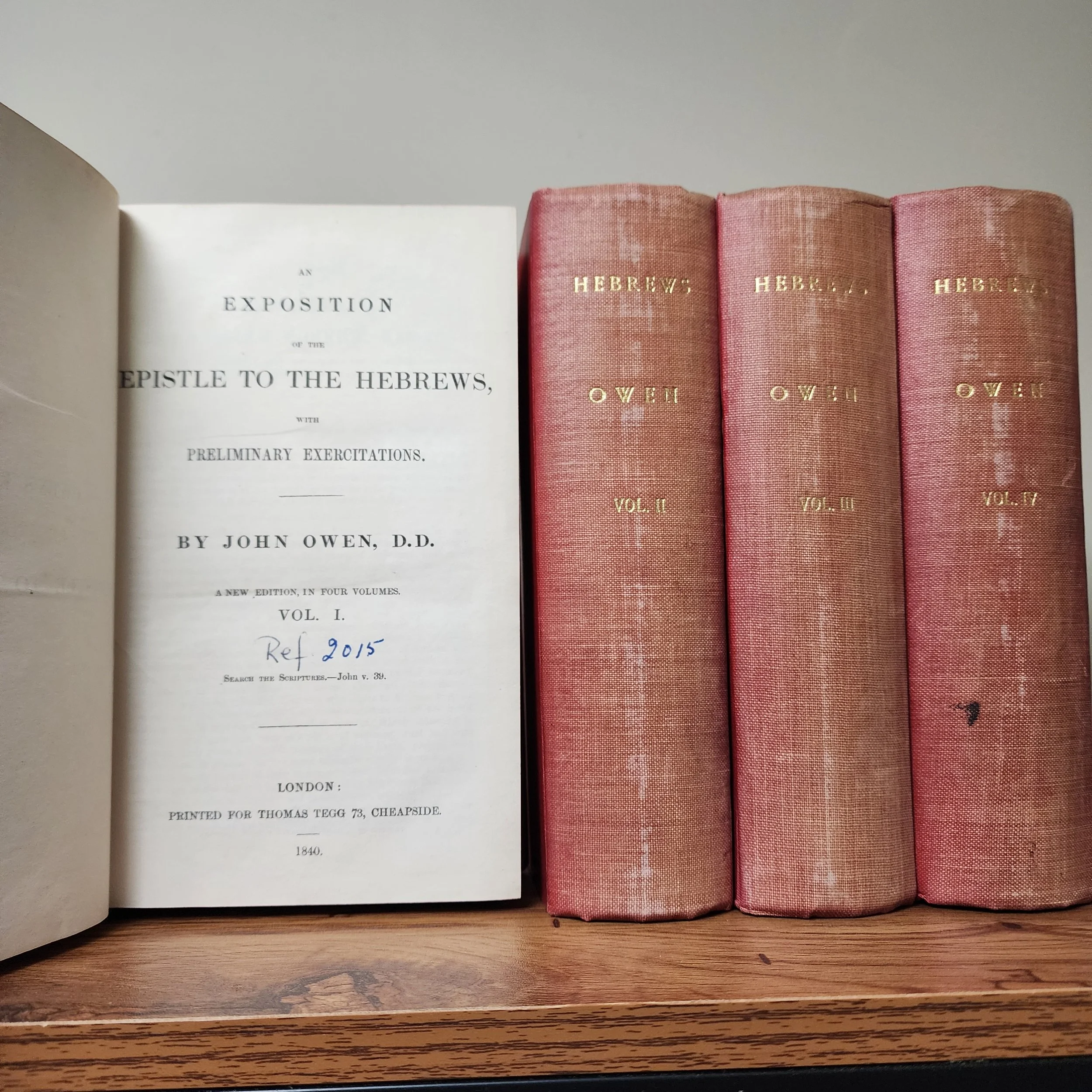
**This is a new edition by Thomas Tegg (1840) of Dr. Wright’s 1812 Exposition of Hebrews, in four large volumes. Combined with the 1826 21-volume Works of John Owen, this exists as the content of the first full publication of John Owen’s complete works—predating T&T Clark’s/Johnstone & Hunter’s works set.**
‘…a work of gigantic strength as well as gigantic size; and he who hath mastered it is very little short, both in respect to the doctrinal and practical of Christianity, of being an erudite and accomplished theologian.’ — THOMAS CHALMERS
“John Owen here analyses the text of Hebrews with care and provides a judicious interpretation which shows an impressive familiarity with a wide range of biblical scholarship. He also provides rich practical applications.
John Owen (1616-1683) was probably the greatest systematic theologian of the British Puritans, yet such was his depth of Christian wisdom and discernment that he also excelled in pastoral and spiritual theology. Common to his stature in both of these areas was his understanding of Scripture. While this is evident throughout his writings, it is in his massive exposition of the Epistle to the Hebrews that the range of his knowledge and the depth of his exegetical powers are most evident. Here he analyses the text with care and provides a judicious interpretation which shows an impressive familiarity with a wide range of biblical scholarship. In addition, following the classical Puritan method of commentary with its constant concern for Christian living, he provides rich practical applications. Thus in a balanced way, he addresses both mind and heart. Written with the reverent spirit of a scholar-pastor whose stated aim in his ministry was ‘to promote holiness’, Owen’s study of Hebrews is one of the great classical commentaries of the Christian Church.”—Banner of Truth.
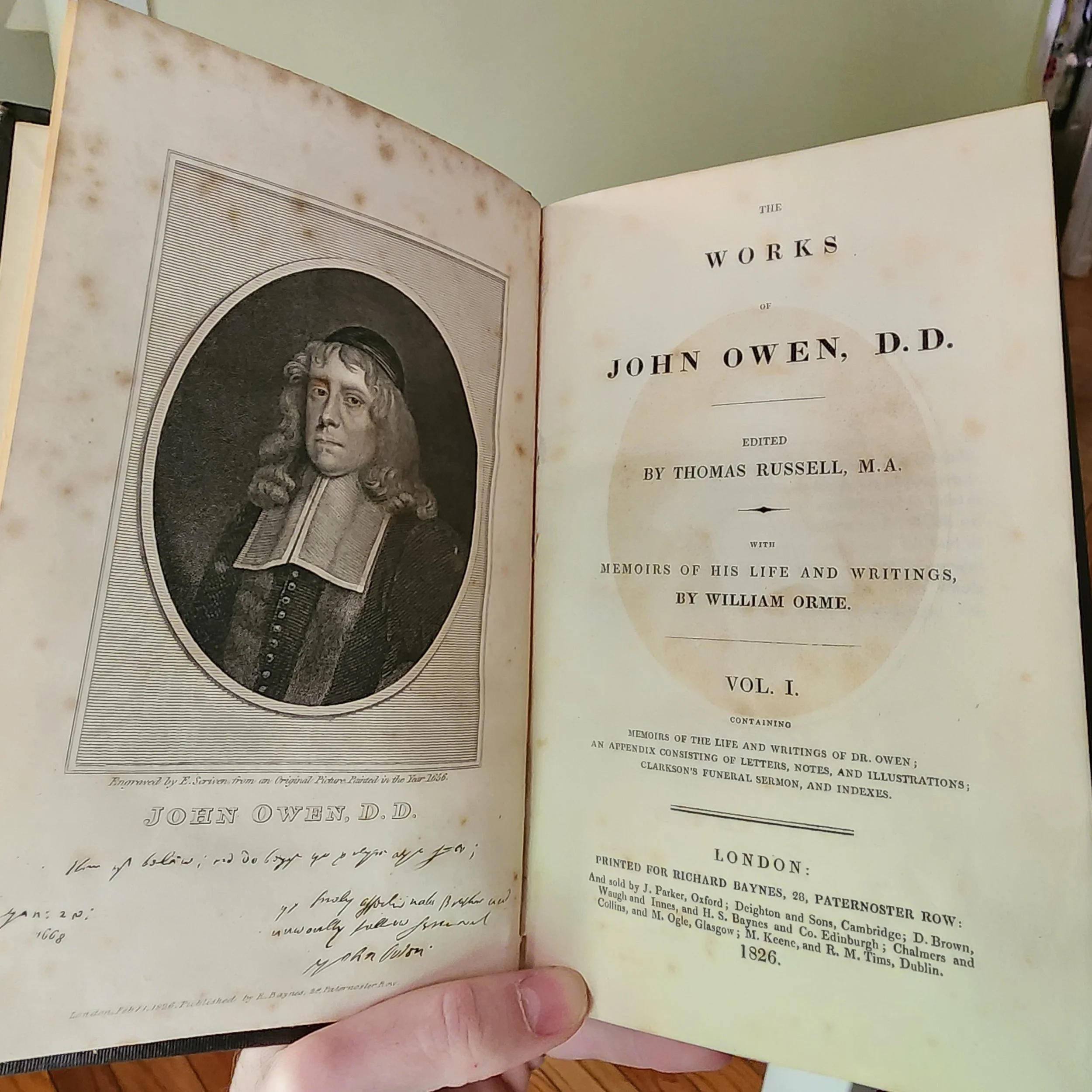
**Rare 21-Volume set of Owen’s Works—the most complete publication of Owen’s material at that time. This is the first true and nearly comprehensive set put together, and would be a treasure to the collector’s library. If you would like to make the set “complete,” see our listing for the 4 vol. Thomas Tegg set of the Exposition of Hebrews or the 7 vol. Johnstone & Hunter set of the same content.**
The 1826 Richard Bayne’s publishing of The Works of John Owen was a foundational subscription printing and update to Owen material in its day. As early as 1721, there were serious considerations made to accumulating Owen’s works together, but it would not be until another century would pass that this publisher would complete the task of putting the most complete collection together to date.
According to the editor of this edition:
In the present collection of Dr. Owen’s Works, the only one approaching to completeness hitherto published, the Theologumena has been omitted, in deference to the wishes of many of the Subscribers; and the Excertitations on a Day of Sacred-Rest, on account of its being inserted in Dr. Wright’s Edition of the Exposition of the Epistle to the Hebrews.
The classification of the Works is not precisely that which the Editor would have preferred. As it had been determined, independently of him, to commence with the Discourse on the Holy Spirit, it remained for him to follow up his arrangement on this basis. Accordingly, the first series of subjects will be found connected with this Treatise, including the Dissertations on the Scriptures, to the end of the fourth volume. The next eight volumes are principally Doctrinal and Controversial; and the two following, Devotional and Practical. The fifteenth, sixteenth, and seventeenth, contain Sermons, and commence the Polemical pieces on Popery, which end with the eighteenth volume; while the three last are occupied chiefly with Church Government, and Miscellaneous Tracts.
According to the editor of the later (c.1862) Works of John Owen by T&T Clark:
The credit of this undertaking is due to the enterprise of Mr. Baynes, the London publisher. The edition was comprised of twenty-one octavo volumes,—the first, however, consisting of the Memoir of Owen’s Life and Writings by Mr. Orme,—and was printed under the editorial care of Mr. Russell, a Dissenting minister in the neighbourhood of London. As the first attempt to collect the works of Owen,—an attempt, the difficulty of which may be inferred from the fact that in his lifetime OWen himself had for years lost sight of some of his own treatises,—and to publish them in a respectable form, it deserved well of the Christian public; and was indeed favourably received, for the subscribers to it rose to the number of three hundred and forty-six, and the impression, it is believed, has long been since exhausted.
The price at which, whether from its scarcity or its size, the edition of 1826 stood, prevented many from purchasing it who cherised an admiration for the writings of this great Nonconformist divine. A strong desire was evinced, in various ways, that his works might be issued in a form more accessible to the generality of the religious community.
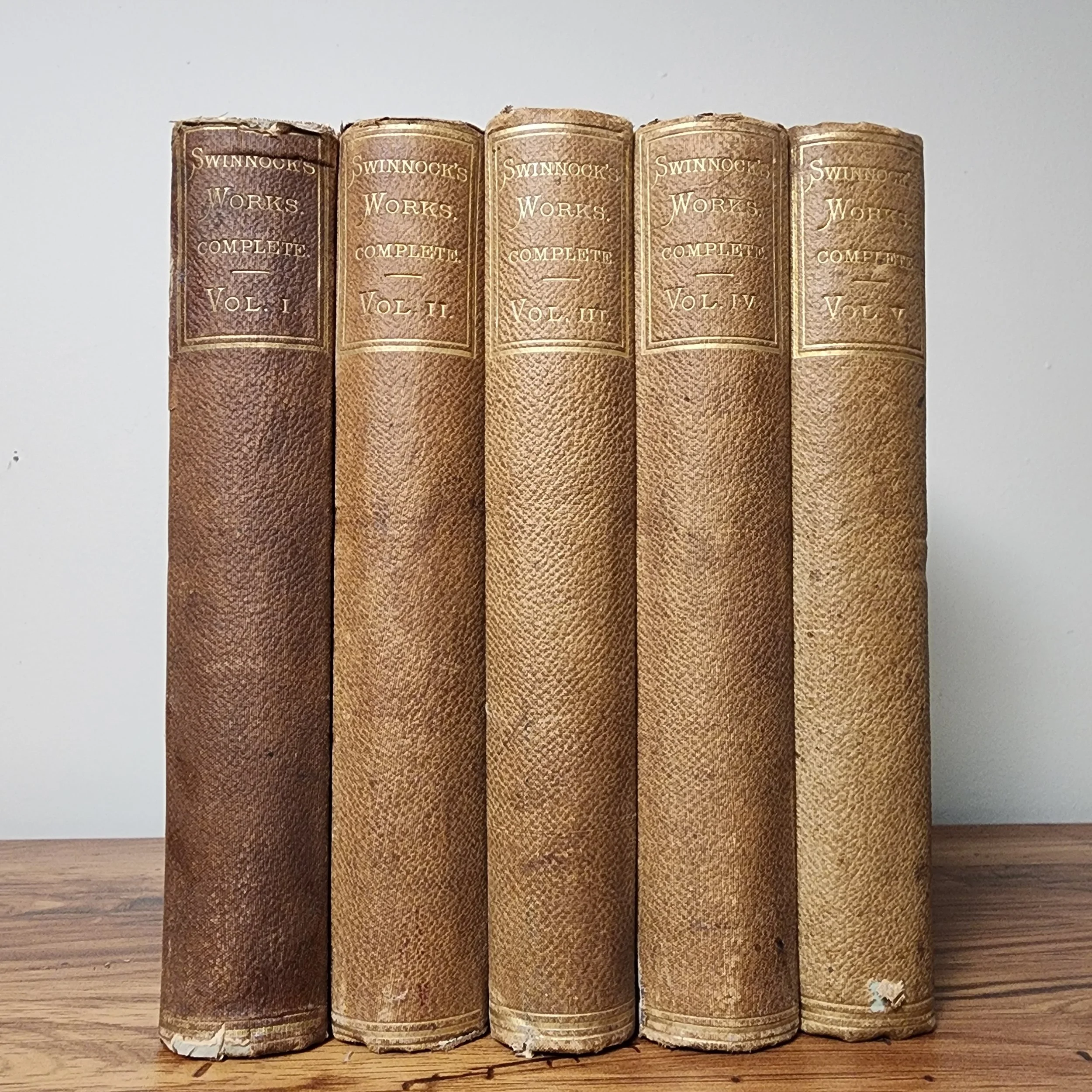
An original 5-volume set of George Swinnock’s works. These are part of the well-known Nichol’s Series of Standard Divines of the Puritan Period. These were published in such a good fashion that they remain the most common volumes to copy for modern republication.
The Sword and the Trowel in1868 said of the works:
“These [Puritan] works have for the most part been unknown to the generality of those who are devoted to the study of theology. Only the productions of a few, such as Bates, Baxter, Charnock, Flavel, Howe, and Owen, were accessible even to those possessed of ample means. But now the writings of most of these ‘giants’ have been cheapened, and the almost lost works of Adams, Brooks, Cawdray, Clarkson, Goodwin, Sibbes, Henry Smith, and Swinnock (may we hope that Manton will be added?) as well as the commentaries of Bayne, Burroughs, Reynolds, George Greenhill, King, Torshell, Trapp, and many more are put within the reach of all. It was a noble enterprise on the part of Mr. Nichol to undertake to recover for us the hidden, almost lost, treasures of Puritan theology, to clothe them in modern handsome form and dress, and issue them at the very lowest of modern prices. . . .
“There is the indisputable fact, that the works of Howe, Owen, Charnock, Goodwin, T. Adams, Sibbes, and Brooks, have supplied more instruction, been productive to more thought, and have suggested more sermons to our leading Noncomformist preachers than any other uninspired writings.
“Provided there is depth of piety and aptitude to teach in the minister, the more knowledge he possesses the better, as is abundantly evidenced by the case of such men as Howe, Charnock, Owen, Adams, and Henry Smith, and even the apostle Paul.”
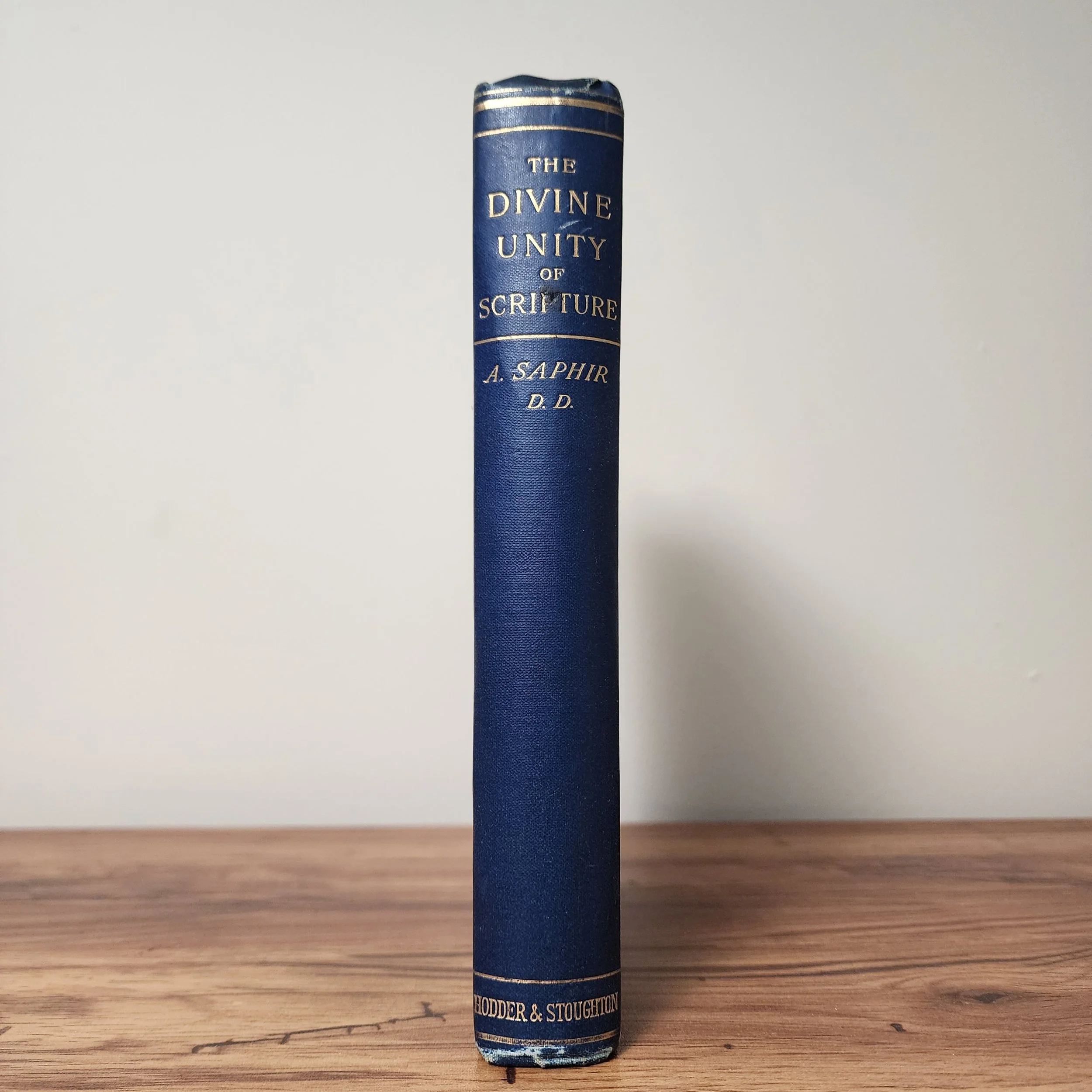
A very nice and clean copy of Saphir’s work on the Divine Unity of Scripture.
The Homelitic Review (July, 1894) says:
“…Dr. Adolph Saphir, whose last book on the ‘Divine Unity of Scripture’ is probably the most thoughtful and suggestive book on the Bible ever yet published, and which has in itself a whole system of divinity and biblical theology.”
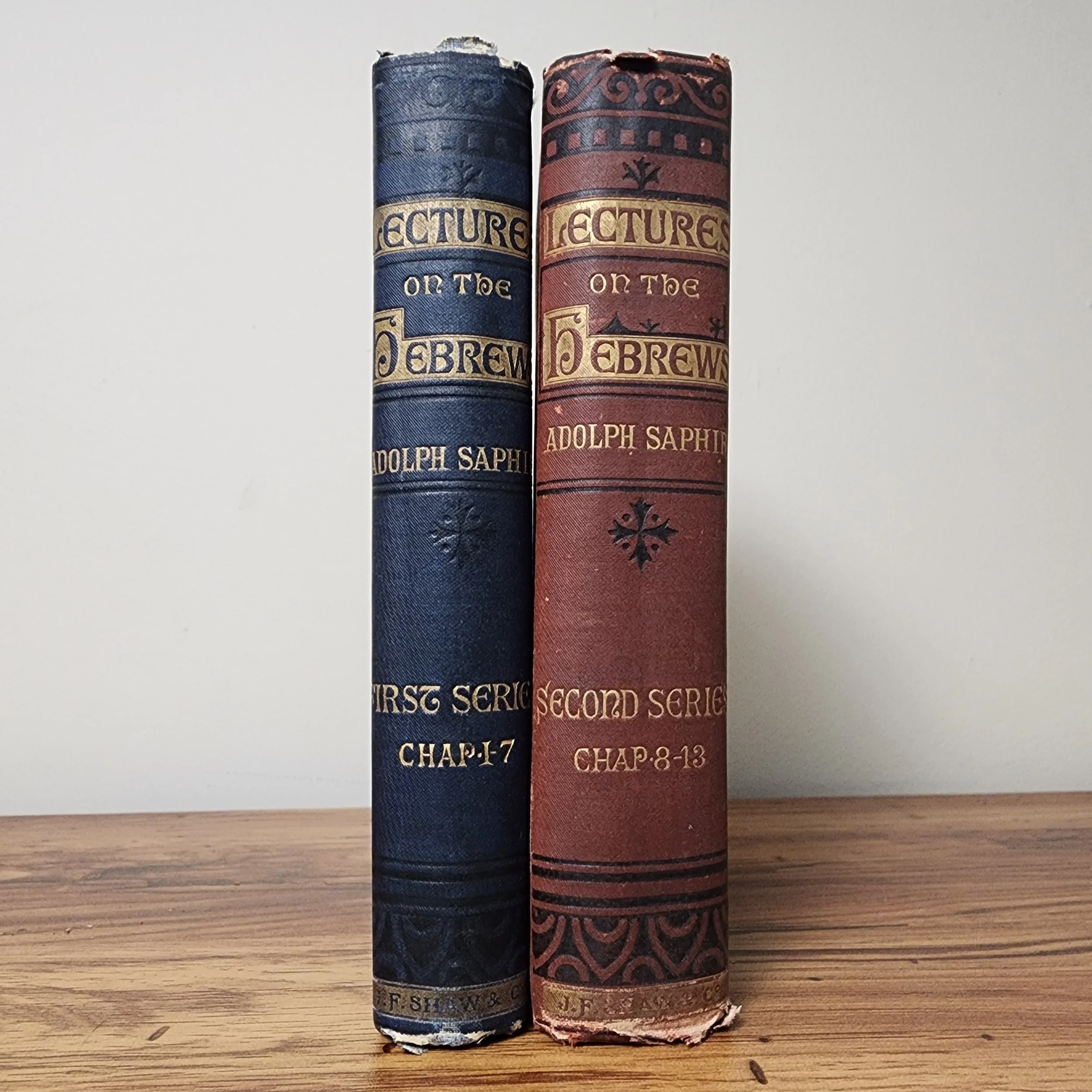
A solid 2-volume set of Adolph Saphir’s Expository Lectures on Hebrews.
Nice, brightly colored boards. Some pages show discoloration, namely at the front and back of the volume, but the vast majority of the volume is clean and clear and in quite good shape. Binding is sound, although not particularly tight, as is common with books ~150 years old.
A nice set to add to the collector’s bookshelf who has yet to pick up this set; this is the most attractive boards that were produced for this volume.
C.H. Spurgeon said in his Commenting & Commentaries:
“Mr. Saphir has always something to say worthy of the attention of spiritual minds. His mind finds a track of its own, but he is never speculative. We always enjoy his remarks, though he is not specially terse or brilliant.”
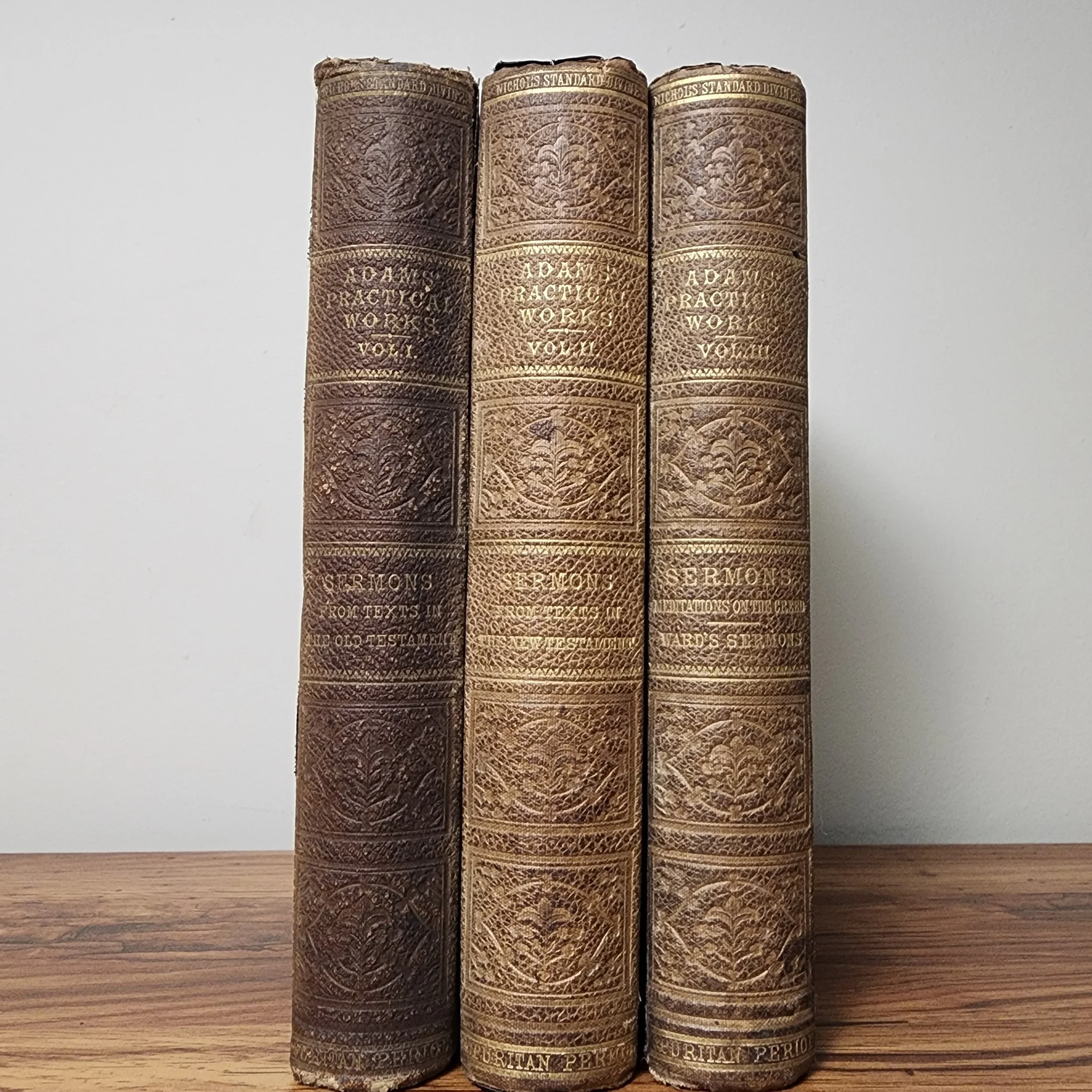
An original 3-volume set of Thomas Adams’ works. These are part of the well-known Nichol’s Series of Standard Divines of the Puritan Period. These were published in such a good fashion that they remain the most common volumes to copy for modern republication.
The Sword and the Trowel in 1868 said of the works:
“These [Puritan] works have for the most part been unknown to the generality of those who are devoted to the study of theology. Only the productions of a few, such as Bates, Baxter, Charnock, Flavel, Howe, and Owen, were accessible even to those possessed of ample means. But now the writings of most of these ‘giants’ have been cheapened, and the almost lost works of Adams, Brooks, Cawdray, Clarkson, Goodwin, Sibbes, Henry Smith, and Swinnock (may we hope that Manton will be added?) as well as the commentaries of Bayne, Burroughs, Reynolds, George Greenhill, King, Torshell, Trapp, and many more are put within the reach of all. It was a noble enterprise on the part of Mr. Nichol to undertake to recover for us the hidden, almost lost, treasures of Puritan theology, to clothe them in modern handsome form and dress, and issue them at the very lowest of modern prices. . . .
“There is the indisputable fact, that the works of Howe, Owen, Charnock, Goodwin, T. Adams, Sibbes, and Brooks, have supplied more instruction, been productive to more thought, and have suggested more sermons to our leading Noncomformist preachers than any other uninspired writings.
“Provided there is depth of piety and aptitude to teach in the minister, the more knowledge he possesses the better, as is abundantly evidenced by the case of such men as Howe, Charnock, Owen, Adams, and Henry Smith, and even the apostle Paul.”
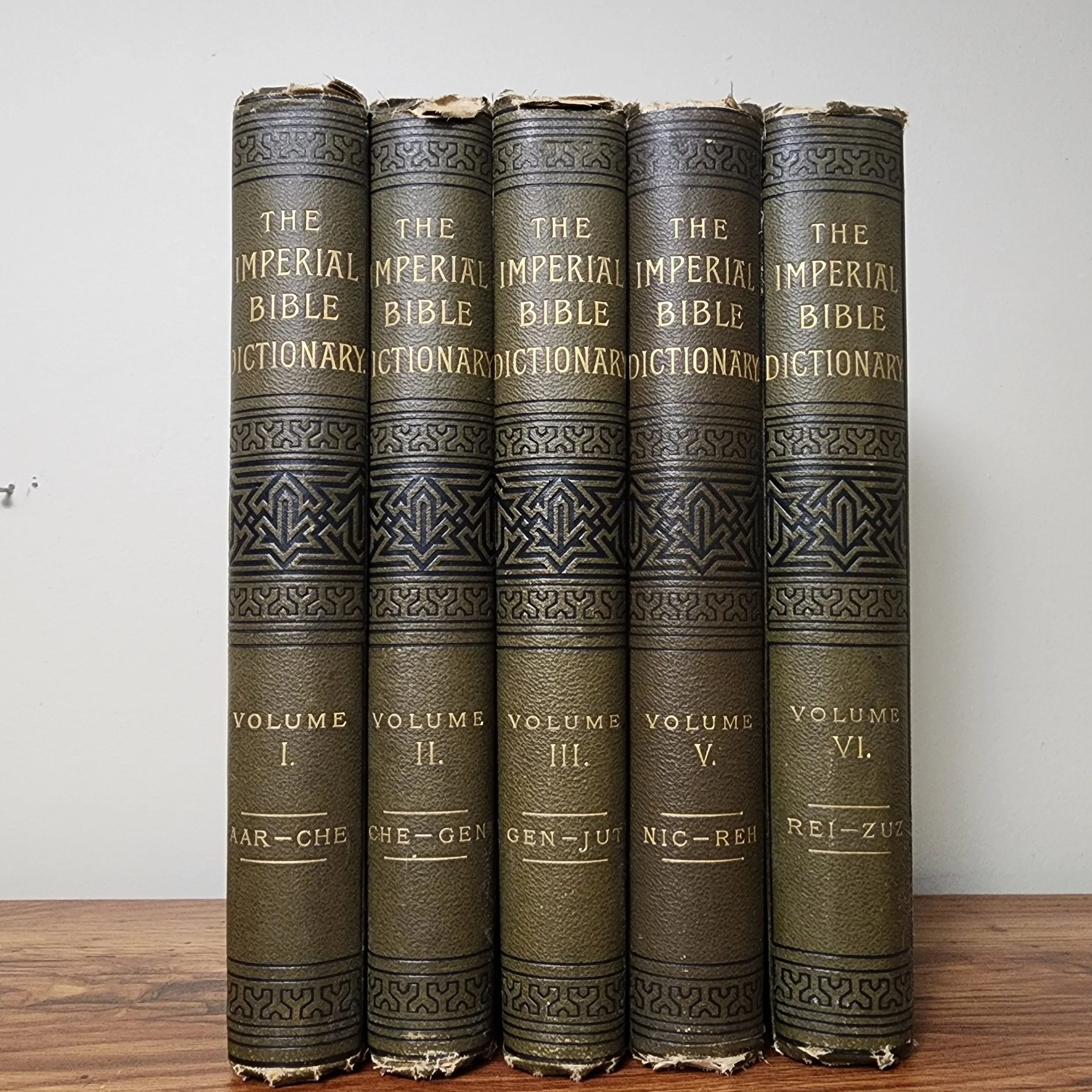
5 Volumes of the Imperial Bible Dictionary, edited by Patrick Fairbairn.
The complete set is 6 volumes, and this collection is only missing Vol. 4 to be complete.
Contributors include Horatius Bonar, John Eadie, Franz Delitzsch, George Smeaton, and many others.
Includes and Introduction by J.C. Ryle.
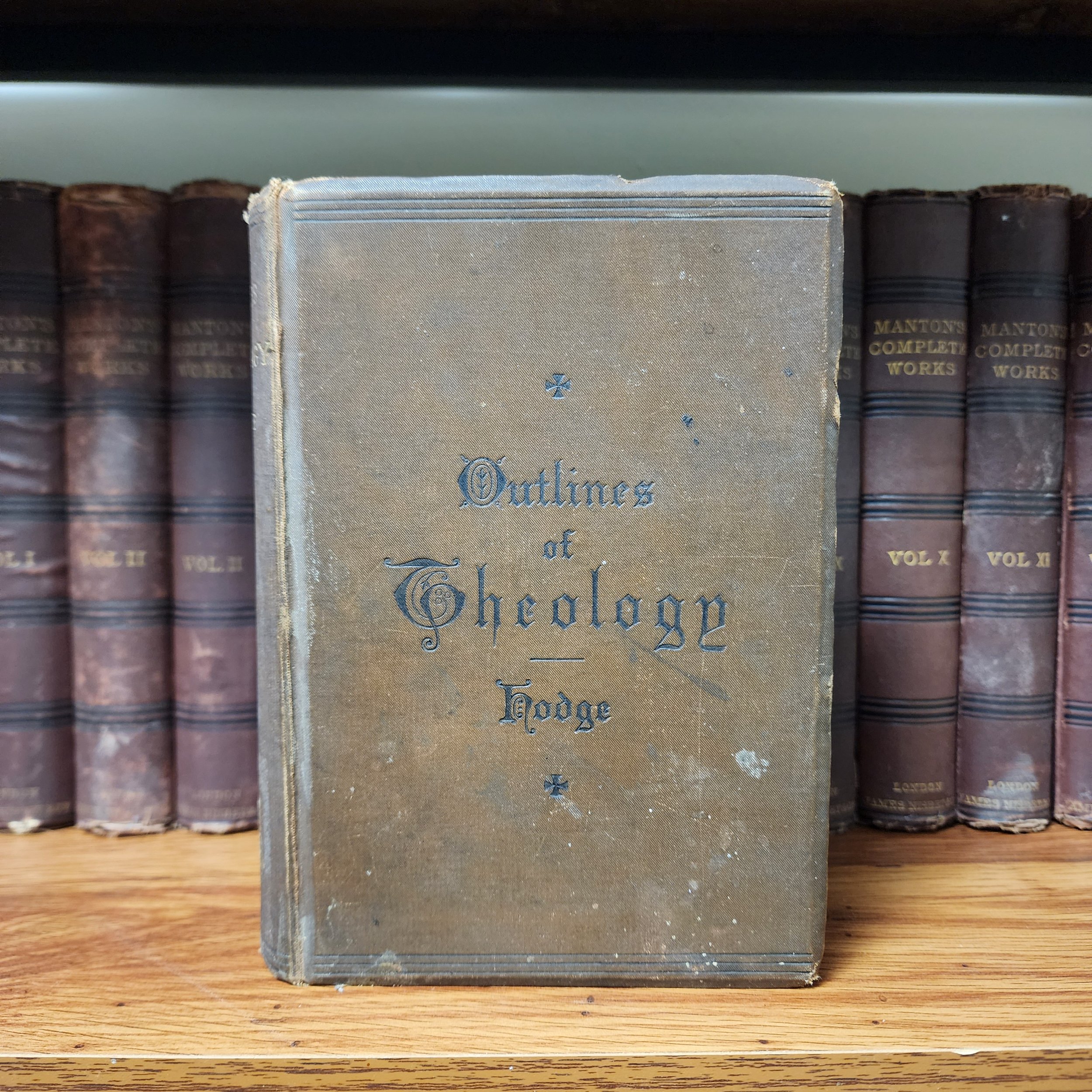
Originially published in 1860, this Outlines of Theology volume by Archibald Alexander Hodge, the son of Princeton Seminary’s venerated Charles Hodge, is one of his best known works. This British edition by Thomas Nelson & Sons is of fine quality compared to much that was being produced in America during the period.
C.H. Spurgeon and company , in the 1865 volume of the Sword and Trowel said:
“WE can best show our appreciation of this able body of Divinity by mentioning that we have used it in our College with much satisfaction both to tutor and students. We intend to make it a Class Book, and urge all young men who are anxious to become good theologians, to master it thoroughly. Of course we do not endorse the Chapter on Baptism. To a few of the Doctor's opinions in other parts we might object, but as a handbook of Theology, in our judgment, it is like Goliah's sword—’there is none like it.’ It is almost entirely in the form of Questions and Answers. It was published by a Son, who had been associated with his Father in the Professorships of a Theological College in America, after the Author's decease.”
Antique, Collectible, & Rare Books
New & Used Books

Assortment of Puritan Paperback volumes by Banner of Truth.
In NEW condition.



“The Christian religion is a golden chain with which the hands of men are fettered from all hatred. The spirit of Christ is love. Wherever he governs, love reigns as a necessary consequence.”

I often tell that the tentacles of Spurgeon are so far-and-wide reaching, that one could cover an endless history and education simply by following the breadcrumbs dropped along the way. The following will detail a fascinatingly arbitrary example.
Amos Ives (A.I.) Root, 1839-1923, was an Ohio businessman who became well-known during his day for developing beekeeping innovations,…

All these evils have taken place, and are happening in the limbs of Christ’s body, and God turns away His face from their prayers, by not hearing as to what they wish for, since they know not that the fulfilment of their wishes would not be good for them. The Church is poor, as she hungers and thirsts in her wanderings for that food with which she shall be filled in her own country: she is in toils from her youth up, as the very Body of Christ saith in another Psalm, Many a time have they overcome me from my youth, [Ps. cxxix. 1]. And for this reason some of her members are lifted up even in this world, that in them may be the greater lowliness.

A London map and virtual tour of prominent locations and/or related sites in the life of Charles Haddon Spurgeon.

David Brainerd’s diary includes a striking hyphenated word, “gospel-temper.” His journal records,
“Wednesday, Dec. 15. Enjoyed something of God to-day, both in secret and social prayer; but was sensible of much barrenness, and defect in duty, as well as my inability to help myself for the time to come, or to perform the work and business I have to do. Afterwards, felt much of the sweetness of religion, and the tenderness of the gospel-temper…”

I Will Pour Water
[St. Peter’s, July 1, 1838]
“For I will pour water upon him that is thirsty, and floods upon the dry ground: I will pour my spirit upon thy seed, and my blessing upon thine offspring: And they shall spring up as among the grass, as willows by the water courses.” [Isa. xliv. 3,4.]

“The Son of God, in mighty love,
Came down to Bethlehem for me,
Forsook His throne of light above,
An infant upon earth to be.
In love, the Father's sinless Child
Sojourned at Nazareth for me;
With sinners dwelt the Undefiled,
The Holy One in Galilee.”

This passage is very relevant to our whole subject of evangelism because here we have one of the greatest evangelists who ever lived giving instructions to one who was told to “. . . do the work of an evangelist. . .” (II Tim. 4:5). Surely these two facts demand our careful and sober consideration. If we are serious about being biblical in our evangelism, we cannot ignore these instructions.
There are several things in these few verses that would correct much of the error in man-centered evangelism, not only in the expected responses, but in the message and methods of evangelism. Let us carefully examine this passage, which contains instructions to one who was given the apostolic command to do the work of an evangelist. In this passage (II Tim. 2:24-26), we have some excellent instructions for the evangelist, preacher, and personal worker, and some necessary evangelistic principles if our evangelism is to be God-centered.
The Sword and Trowel Tracts of C.H. Spurgeon — Foreword by Phil Johnson.
Never before have the full numbered tracts of C.H. Spurgeon, from his Sword & Trowel magazine (1865-1869), been printed and offered together until now. This small volume contains fully re-typeset tracts with updated original images to provide the reader with a fascinating look into Spurgeon’s array of tract material that was offered to the masses for distrubition. Brief insight into the roots of church tracts (via Tractarianism) in the UK help to offer understanding as to where these little works fit in the scheme of Spurgeon’s ministry and Church evangelization in the UK during his day.